Slide 1 of 20
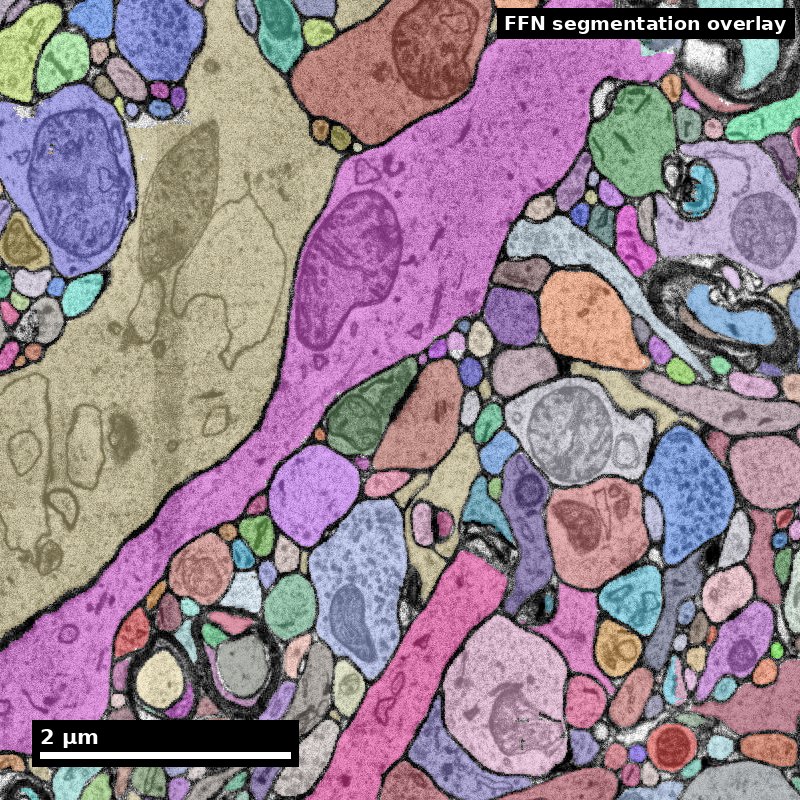 Nanoscale · Module 02
Research Foundations and the Hidden Curriculum
Teaching Deck
Human cortex · H01
Object segmentation over electron microscopy
H01 release · Lichtman Lab / Harvard & Connectomics at Google · CC BY 4.0
Shapson-Coe et al. (2024) · doi:10.1126/science.adk4858
Slide 2 of 20
Learning Objectives
- Describe key hidden-curriculum norms in research settings
- Navigate roles, expectations, and communication channels
- Use dataset documentation to infer responsible analysis boundaries
- Build a personal support/mentorship map
Slide 3 of 20
Capability Target
Create a personal research-navigation plan that includes role expectations, communication scripts, and mentor support pathways. Demonstrate understanding of research ethics norms specific to connectomics, including data attribution, responsible use of human tissue data, and collaborative proofreading etiquette.
Slide 4 of 20
Concept Focus
1) The "hidden curriculum" of research
- Technical: unwritten norms govern scientific research --- how to ask questions, how to admit uncertainty, how to give and receive feedback, how to navigate lab hierarchies.
- Plain language: there are rules nobody writes down but everyone is expected to follow.
Figure description and teaching notes
Further teaching detail from the module:
**Technical:** unwritten norms govern scientific research --- how to ask questions, how to admit uncertainty, how to give and receive feedback, how to navigate lab hierarchies. These norms vary by institution, lab, and PI, but common patterns exist: arrive at meetings prepared, version-control your work, attribute contributions explicitly, escalate problems early rather than late.
Slide 5 of 20
Concept Focus (continued)
- Misconception: you will be taught everything you need to know.
- In practice: Many critical skills (how to write a methods section, how to respond to a reviewer, how to push back on a senior colleague's suggestion) are learned by watching others, making mistakes, or asking directly.
Slide 6 of 20
Core Workflow
- Decode one research setting's unwritten rules.
- Map roles and communication paths.
- Practice help-seeking script.
- Define personal support network.
Slide 7 of 20
Core Workflow (continued)
- Identify ethical considerations relevant to your dataset.
- Draft attribution and collaboration norms for your team.
Slide 8 of 20
Run of Show (90 min)
- Block 1: Hidden curriculum reveal (00:00-15:00)
- Block 2: Role and expectation mapping (15:00-30:00)
- Block 3: Ethics in connectomics (30:00-45:00)
- Block 4: Communication script workshop (45:00-65:00)
Figure description and teaching notes
Block 1: Hidden curriculum reveal (00:00-15:00)
Instructor script: "Raise your hand if you have ever felt lost in a research setting --- not because the science was hard, but because you did not know the unwritten rules." (Expect most hands.) "Today we make those rules explicit."
Present 5 hidden-curriculum scenarios (3 minutes each):
You disagree with a senior lab member's interpretation at lab meeting. What do you do?
You find a bug in shared analysis code. How do you report it?
You need help but your mentor is busy. Who else can you ask?
You are asked to proofread neurons outside your assigned region. Should you?
A collaborator uses your annotation work in a paper without crediting you. How do you respond?
For each scenario, collect 2-3 responses from learners, then present a recommended approach.
Block 2: Role and expectation mapping (15:00-30:00)
Instructor script: "Every research team has roles. Let's map them." Draw a role diagram on the board: PI, postdoc, graduate student, undergraduate, technician, proofreader, data manager. For each role, ask: "What does this person expect from you? What can you expect from them?"
Learners fill in a role-expectation worksheet for their own research setting (or a hypothetical one).
Discuss: where do expectations conflict? Where are they ambiguous?
Block 3: Ethics in connectomics (30:00-45:00)
Instructor script: "Connectomics data is not just pixels. It comes from real organisms, sometimes from human patients. Let's talk about what that means."
Cover three ethics topics:
Data provenance: every analysis should reference a specific dataset version. Show how CAVE materialization versions work.
Attribution: the 287 FlyWire proofreaders were co-authors. Discuss what fair attribution looks like at scale.
Human tissue: discuss IRB requirements, de-identification, and the responsibility that comes with working on data derived from surgical patients.
Group discussion: "What ethical situation might you encounter in your work? How would you handle it?"
Block 4: Communication script workshop (45:00-65:00)
Instructor script: "We are going to practice the hardest part of research: talking to people." Distribute script templates for five common situations (asking for help, admitting uncertainty, giving feedback, receiving feedback, escalating problems).
Learners customize scripts for their own context (10 min).
Role-play in pairs: one person plays the mentor/colleague, the other practices the script (10 min, switch roles).
Block 5: Personal navigation plan (65:00-85:00)
Instructor script: "Now bring it all together. You are going to create a one-page document that you can actually use."
Learners draft their "lab navigation playbook" including:
Top 5 norms for their research setting.
Role-expectation map for their team.
Three communication scripts customized for their context.
Mentor/support map: at least 3 people they can go to for different types of help.
Ethical commitments: how they will handle attribution, data provenance, and error reporting.
Block 6: Exit ticket (85:00-90:00)
Submit: (1) your lab navigation playbook; (2) one reflection sentence on the most surprising hidden-curriculum norm you learned today.
Instructor script: "Keep this playbook accessible. Revise it as you learn more about your research environment."
Slide 9 of 20
Run of Show (90 min) (continued)
- Block 5: Personal navigation plan (65:00-85:00)
- Block 6: Exit ticket (85:00-90:00)
Slide 10 of 20
Misconceptions to Watch
- Misconception: you will be taught everything you need to know.
- Misconception: if the data is publicly available, there are no ethical considerations.
- Misconception: research is a solitary activity.
- Misconception: good researchers do not make mistakes.
Slide 11 of 20
Misconceptions to Watch (continued)
- Misconception: scripted communication is inauthentic.
Slide 12 of 20
Make your help request actionable
Illustrative request: “My result changed after a data update.”
- 1
Show the goal
What were you trying to measure?
- 2
Show the evidence
Record the version, query and difference.
- 3
Name the decision
Ask which comparison or permission to check.
Discuss: Who can answer this question, and what do they need from you?
Illustrative teaching scenario; see this module’s lesson and worked example.
Figure description and teaching notes
Visual description and discussion guidance:
The boxes organize a request: goal, evidence and decision. They are not a test of confidence or social style. Requests can be written, spoken, or made with support.
Slide 13 of 20
Make a support map you can use
A fictional lab has three different points of contact.
- 1
Peer or mentor
Help with a method or an unclear expectation.
- 2
Dataset steward
Clarify documentation, access or reuse boundaries.
- 3
Supervisor or support office
Resolve responsibilities or a concern needing escalation.
Discuss: Write one question for each role. Do not include private disclosures.
Illustrative teaching scenario; see this module’s lesson and worked example.
Figure description and teaching notes
Visual description and discussion guidance:
These are alternative routes, not a compulsory hierarchy. Actual responsibilities vary. Check local written guidance; a learner need not approach a peer before using an appropriate route for a sensitive concern.
Slide 14 of 20
Studio Activity
Scenario: Learners produce a one-page research navigation document that serves as a practical reference throughout the program. It is built in four parts: a norms inventory (15 minutes), communication scripts (20 minutes), a mentor and support map (15 minutes), and an ethics commitment (10 minutes).
Slide 15 of 20
Activity Output Checklist
- Evidence-linked artifact submitted.
- At least one limitation or uncertainty stated.
- Revision point captured from feedback.
Slide 16 of 20
Assessment Rubric
- Minimum: clear norms list, help-seeking plan, and at least one communication script.
- Strong: realistic escalation paths, reflection on barriers, ethics commitment with specific practices, mentor map with backup contacts.
- Failure: generic advice without actionable steps; no personalization to learner's own context.
Slide 17 of 20
Exit Ticket
Draft one email requesting clarification on an unclear lab expectation. Then write a 2-sentence ethics commitment explaining how you will handle attribution in a collaborative proofreading project.
Slide 18 of 20
References (Instructor)
- Use module references listed on the module page.
Slide 19 of 20
Teaching Materials
- Module page: /modules/module02/
- Session kit: /teaching/sessions/module02/
- Worksheet: /assets/worksheets/module02/module02-activity.md
Slide 20 of 20
Read, review, or teach
The reading version includes figure descriptions and discussion guidance.
Nanoscale text: CC BY 4.0. Scientific figures retain their individual credits.