Slide 1 of 19
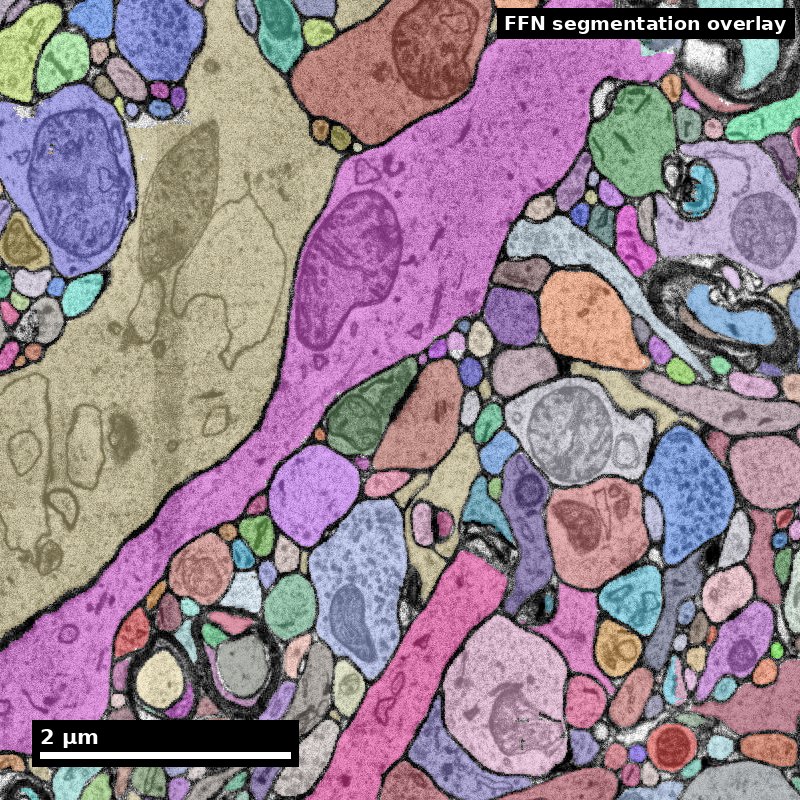 Nanoscale · Module 21
Reproducibility and FAIR Principles in Connectomics
Teaching Deck
Human cortex · H01
Object segmentation over electron microscopy
H01 release · Lichtman Lab / Harvard & Connectomics at Google · CC BY 4.0
Shapson-Coe et al. (2024) · doi:10.1126/science.adk4858
Slide 2 of 19
Learning Objectives
- Apply FAIR principles to connectomics data products
- Define minimum reproducibility metadata for analysis releases
- Build transparent methods/parameter logs for peer reuse
- Identify hidden-curriculum norms in reproducibility expectations
Slide 3 of 19
Capability Target
Publish a reproducibility-ready connectomics package (data + methods + metadata + limitations) that an external group can audit and reuse.
Slide 4 of 19
Concept Focus
1) FAIR as implementation checklist
- Technical: findable identifiers, accessible storage, interoperable formats, and reusable metadata each require concrete engineering choices.
- Plain language: "FAIR" only counts if someone else can actually find, open, and use your work.
- Misconception guardrail: posting files online makes work FAIR.
Slide 5 of 19
Core Workflow
- Define release scope (dataset slice, code commit, parameter set).
- Add machine-readable metadata and provenance fields.
- Validate rerun path in a clean environment.
- Write methods/limitations notes for external users.
Slide 6 of 19
Core Workflow (continued)
- Publish with changelog and deprecation policy.
Slide 7 of 19
Run of Show (60 min)
- 00:00-06:00 | Framing: the silent bug
- 06:00-16:00 | The five-element checklist, modeled
- 16:00-30:00 | Guided practice: audit your own work
- 30:00-40:00 | Clean-environment rerun
Figure description and teaching notes
Pre-class preparation (15 min async)
Bring one analysis you have run, in whatever state it is in. It does not need to be tidy; untidy is more useful here.
Read Technical Unit 04, section 2, on materialization versions and root-ID instability.
Minute-by-minute plan
00:00-06:00 | Framing: the silent bug
Prompt: "Your notebook ran fine last month and gives a different number today. Nothing in your code changed. What happened?"
Establish that analysis against an unpinned segmentation is the most common silent correctness failure in this field.
06:00-16:00 | The five-element checklist, modeled
Instructor walks one real analysis through: dataset release ID, materialization number, code commit hash, environment specification, parameter configuration.
Show what breaks when each one is missing, in turn.
16:00-30:00 | Guided practice: audit your own work
Learners score their brought-in analysis against the five elements. Most will fail two or three; say so in advance to make that safe.
Produce a remediation list ordered by how cheap each fix is.
30:00-40:00 | Clean-environment rerun
Attempt a rerun of a partner's analysis from their instructions alone, without asking them questions.
Log every point of friction. The friction log is the deliverable, not the successful rerun.
40:00-50:00 | Known limitations, written honestly
Each learner drafts a limitations paragraph naming concrete failure modes, excluded samples, and failed runs — not generic caveats.
Discuss why this is a hidden-curriculum norm: reviewers expect it, and almost nobody is taught to write it.
50:00-57:00 | Competency check
Submit: completed five-element record, friction report on a partner's package, and one limitations paragraph.
57:00-60:00 | Exit ticket
"One thing in my current work that another person could not reproduce today."
Formative checkpoints
At 30 minutes: every learner has identified at least one missing element in their own work. A learner reporting five out of five has probably not audited honestly — check.
At 50 minutes: limitations paragraphs name specific failure modes rather than generic hedges.
Slide 8 of 19
Run of Show (60 min) (continued)
- 40:00-50:00 | Known limitations, written honestly
- 50:00-57:00 | Competency check
- 57:00-60:00 | Exit ticket
Slide 9 of 19
Misconceptions to Watch
- Misconception guardrail: posting files online makes work FAIR.
- Misconception guardrail: a notebook that ran end-to-end once is proof of reproducible science.
- Misconception guardrail: reproducibility norms are common sense that any careful trainee will infer without being taught.
Slide 10 of 19
Studio Activity
Scenario: Your lab plans to release a connectomics analysis package to collaborators.
Slide 11 of 19
Activity Output Checklist
- Evidence-linked artifact submitted.
- At least one limitation or uncertainty stated.
- Revision point captured from feedback.
Slide 12 of 19
Assessment Rubric
Minimum pass
- All five provenance elements present: dataset release ID, materialization number, code commit hash, environment specification, parameter configuration.
- Re-run instructions testable by a peer without contacting the author.
- Limitations name concrete failure modes, excluded samples, and failed runs rather than generic hedges.
Slide 13 of 19
Assessment Rubric
Strong performance
- Clean-environment rerun actually attempted, with a friction log and remediations ordered by cost.
- Hidden norms made explicit: version identifiers in figure legends, a changelog, and a deprecation note.
- ID churn quantified whenever identifiers cross versions, and reported in the methods.
Slide 14 of 19
Assessment Rubric (continued)
- Documentation is audit-friendly: an external reader can locate every provenance element from the README alone.
Slide 15 of 19
Assessment Rubric
Common failure modes
- Missing version identifiers for data or code.
- Methods that omit key parameters or the environment specification.
- "Reproducible in principle" claims without a validation rerun.
- Limitations sections written as boilerplate rather than as concrete guidance.
Slide 16 of 19
Exit Ticket
Take one prior analysis output and add:
- provenance metadata,
- reproducibility instructions,
- a 5-line limitations section.
Slide 17 of 19
References (Instructor)
- Wilkinson et al. (2016) - FAIR Guiding Principles.
- Peng (2011) - Reproducible Research in Computational Science.
- Project-specific release documentation for H01/MICrONS/FlyWire.
Slide 18 of 19
Teaching Materials
- Module page: /modules/module21/
- Session kit: /teaching/sessions/module21/
- Worksheet: /assets/worksheets/module21/module21-activity.md
Slide 19 of 19
Read, review, or teach
The reading version includes figure descriptions and discussion guidance.
Nanoscale text: CC BY 4.0. Scientific figures retain their individual credits.